
More about the protocol and less the crypto ?
Beware dinner parties with central bankers (CBs) interested in DeFi and bitcoin. I was at such an occasion and afterwards got invited/challenged to give a speech about what I was doing in the crypto space.
I should mention that the invite was not just from anybody, but the Swiss National Bank technology forum. I am honored and pleased central bankers are listening to all sorts of new technology ideas. Even fringe ideas like my own.
Below is some of what I said.
Why speak to Cefi about Defi ?
Ideas are central, their implementation/generation can be decentral. As many Swiss are polyglot, I mentioned that language is sufficiently central to understand, but changes in a decentralized way.
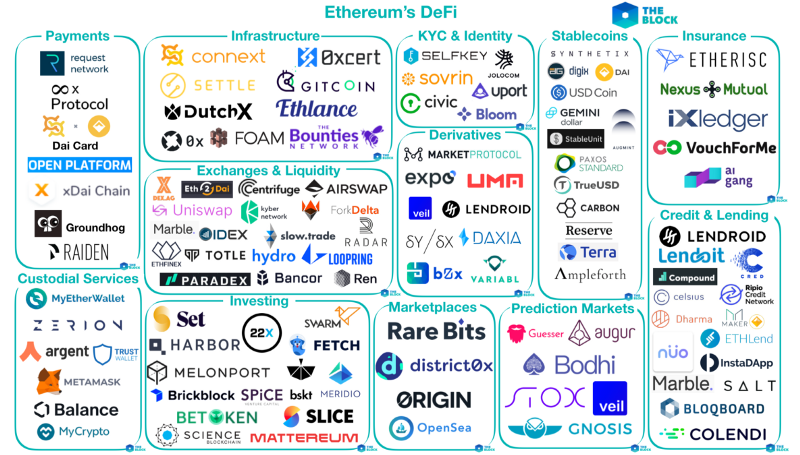
It is the best time to be a central bank. There are armies of people working on traditional banking issues. I stole this slide to show the magnitude of innovation in DeFi land
OK, so that’s nice, but what is the problem and motivation for crypto?
A few slides later I offered a summary of the current solution to too much centralized trust.
These three items resulting from Nakamoto’s paper in 2008 offer a powerful paradigm to developments in blockchain, DeFi and web3.0. I think the circular, virtuous element married to decentralized models will have profound implications for commerce, banking and governance.
But, my humble objective in DeFi is to get more commercial use on to blockchains.
A protocol I am working on is for claims. My framework for ‘money’ is a claims ledger. People did things for each other and kept track. I do something for you with the loose agreement that then you do something for me. This is more formally represented by medieval tally sticks.
The idea was to mark on two tally sticks (yours and a collaborator — two sources of truth) that you had done some job. Your tally mark on both sticks meant that your friend was next to do similar work. A tally stick could be traded — if people knew the signatures on the stick and what sort of jobs had been performed. (not scalable)
There are two other base monetary systems. These are commodity (gold) and public physical ledgers — like Rai stones. These two and other ‘hybrid’ systems I consider more advanced and come into question later in the story.
So, let’s get back to tally sticks. It is my contention tallying comes first and that later agreement on some money becomes the remedy for swapping or ‘monetizing’ tally sticks -as in you may not know the quality of work represented on a particular tally stick — but you can have a generalized idea of the market price for work (a tally) after we agree on a money.
As economies grew, people needed to forget ‘swapping tally sticks’ and simply use an agreed upon money as proof of work. Curiously, we have all been decentralized ‘miners’ proving work way before internet p2p consensus protocols and forms of money.
Well, that is all interesting, but why is there more yield farming and liquidity providing in crypto land than actual commerce?
In my view, the blockchain is a record of work performed. I see it as the final part to a commercial system.
It is not the genesis.
I introduced my suffering audience to the accounting journal token (AJT). An AJT is the most simple component of the Bulla protocol. This token can be thought of as a tally stick where tallies are marked in some crypto and signed by a particular wallet. Upon validation, an AJT performs what people call ‘triple entry’ accounting where the final step is wallet to wallet crypto payment. Wallet to wallet digital payment via p2p was impossible during the renaissance double entry accounting era but just imagine da Vinci as a front end developer.
I found an older tool of commerce. A Bulla.
The Bulla above was used in ancient times as a collection for claims — and signed by some authority.
I had created AJTs — why not allow these to be collected in some sort of signed ‘envelope’?
Below is a schema for a Bulla token created by the Bulla protocol.